The Risk You Can't See: Why Safety Guarding Under Overhead Rail Bags Is Critical
Protecting Your Team and Your Business in the Modern Laundry
By Ray Hayes
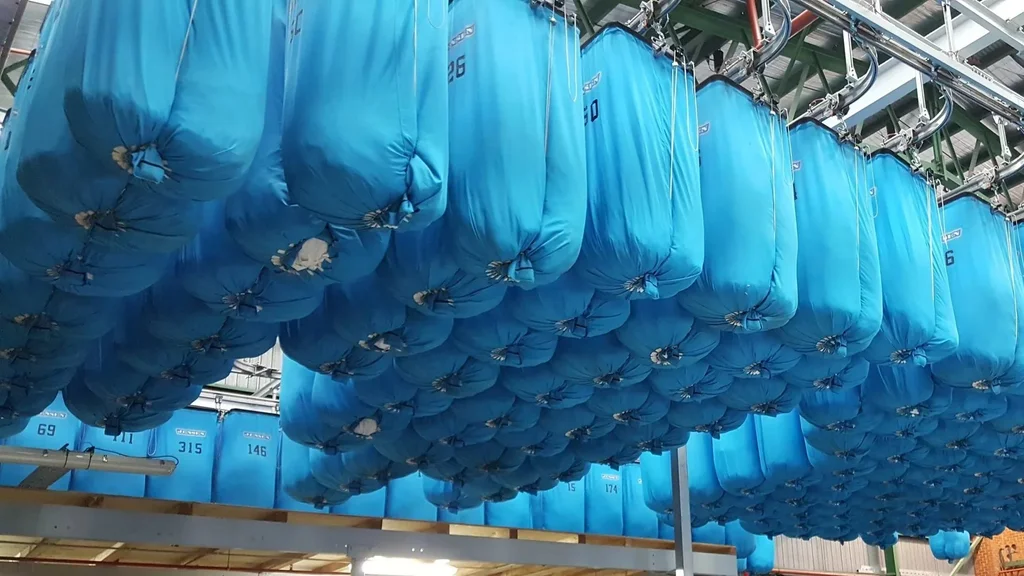
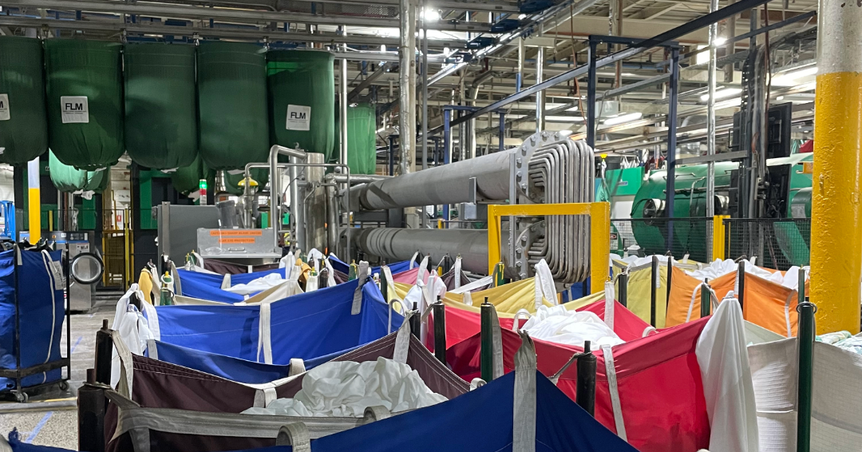
Overhead rail bag systems Ο are the backbone of high-volume commercial laundries. They move tonnes of linen quickly and efficiently, keeping production flowing. But lurking above your workers' heads is a hazard that can't be ignored: the risk of a falling bag.
When a single failure occurs - a hook slips, a bag ruptures, or equipment malfunctions - the result can be devastating. In laundries where bags routinely carry hundreds of kilograms, a falling load is more than just a hazard. It's a potential life-threatening event.
High-Risk Zones That Must Be Guarded
Not every area under a rail system presents equal risk. Smart operators focus on guarding the zones where workers are most exposed:
- Stationary Workstations - Folding benches, sorting tables, and inspection points are high-priority areas. Staff at these locations can't simply step aside if a bag fails. Overhead mesh screens or canopies are essential.
- Personnel Pathways - Walkways beneath active rails should be rerouted where possible. If not, install impact-rated guards and clearly marked exclusion zones.
- Loading/Unloading Zones - Bags are at their most vulnerable during raising and lowering. Guarding and floor markings keep staff clear during these operations.
- Maintenance Access Points - When performing repairs, workers are directly under the system. Physical guarding and lock-out/tag-out procedures are vital.
The Physics of a Falling Bag Did You Know?
- Weight of wet linen bag: 70 kg (at 40% moisture retention).
- Fall height: 2 metres.
- Impact force: >1.4 kN (kilonewtons).
- Equivalent to being hit with a large sledgehammer dropped from above.
This force is enough to cause catastrophic head or spinal injuries and, in many cases, would be fatal. This is why Australian Standard AS 4024 recommends robust guarding around overhead loads to prevent injuries.
The Business Case for Guarding
Installing guarding may feel like a cost with no return. But consider the alternative:
- A single injury can cost hundreds of thousands in compensation, legal fees, and downtime.
- Regulators are cracking down on overhead hazards, and penalties for non-compliance are significant. Protecting your people protects your productivity.
Take Action Now
- Audit your rail systems for unguarded danger zones.
- Engage engineers to design impact-rated guarding.
- Train your team on overhead load safety and exclusion zones.
Safety isn't an afterthought - it's a responsibility. Don't wait for an incident to force change. Act now to keep your team safe and your business secure.